Experts exchange knowledge on harbour porpoise bioenergetics and offshore wind energy during three-day workshop
Tuesday 23 December 2025
In November, a group of 30 international experts from science and policy came together at the Faculty of Veterinary Medicine of Utrecht University for a workshop focused on the condition of harbour porpoises in relation to offshore wind energy. The idea behind this three-day workshop was to stimulate collaboration and knowledge exchange, with the aim of improving models used to assess the population-level effects of offshore wind on harbour porpoises. A “unique opportunity for cross-fertilisation and new initiatives” was the unanimous response of the participants afterwards.
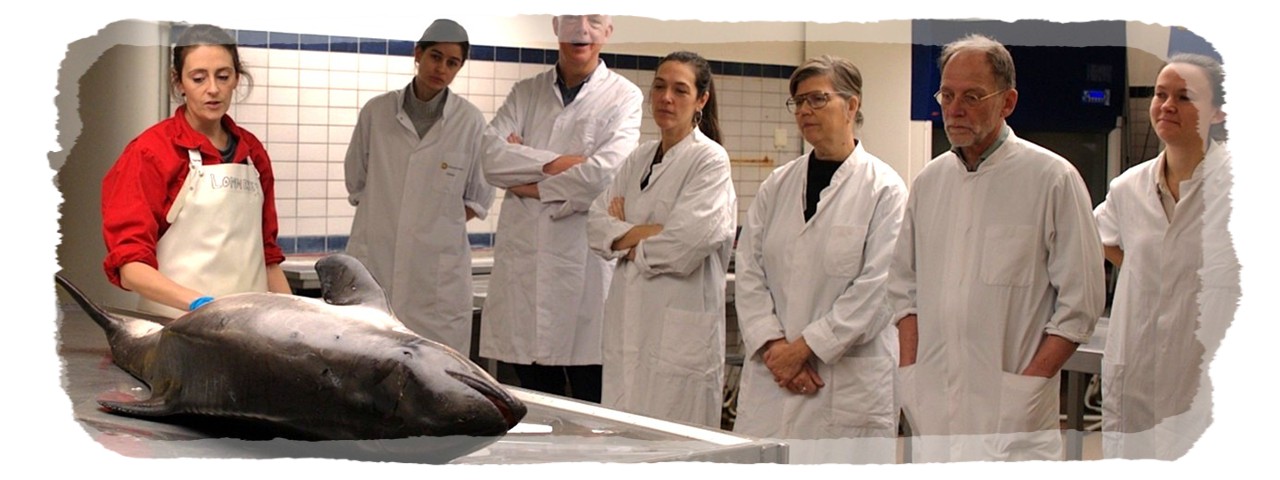
The workshop started in the dissection room with a demonstration by biologist Lonneke IJsseldijk. She showed how pathological research on a deceased, stranded harbour porpoise is conducted. IJsseldijk: “Autopsy reports are full of up-to-date knowledge about the health and reproduction of harbour porpoises from the southern North Sea. By making these data available, we can feed the models with real-time data. That makes the outcomes more reliable and increases confidence in population predictions.”
Cross-pollination
Lively discussions quickly emerged among the various experts in harbour porpoise bioenergetics and modelling. Initiatives for future collaborations also arose. According to Wozep content advisor Marije Siemensma, it was indeed a unique occasion. “It was very special to have so many pathologists and stranding researchers sitting together with researchers on energy condition. And in addition, there was cross-pollination with modellers, who use the data but were now also able to ask concrete questions of the ‘suppliers’ of the parameters,” Siemensma said.
Treasure trove of information
Each year, hundreds of dead, stranded harbour porpoises are found along the Dutch coast. A portion of these is examined at Utrecht University, commissioned by the Ministry of Agriculture, Fisheries, Food Security and Nature, to determine the causes of death. In addition to natural causes, specific attention is paid to causes related to human activities, including fisheries, shipping and the construction of wind farms. The autopsies also provide a treasure trove of information on the reproductive cycle, health status and body condition. Wind farm developer Ecowende and Wozep contribute to a four-year research project at Utrecht University aimed at improving knowledge of the harbour porpoise population by investigating links between body condition, reproduction and health of harbour porpoises from the southern North Sea.
Ecowende’s Ecology Manager Hermione van Zutphen once again emphasises the importance of such a multidisciplinary workshop. “We know that the harbour porpoise is the most sensitive marine mammal in our wind farm area. By minimising disturbance—for example through innovative installation techniques for wind turbine foundations—we can also help many other species. Closing knowledge gaps about the harbour porpoise is essential, and this research into their physiology is an important part of broader research into the species and the impact of offshore wind. That is why workshops like this, as well as cooperation between sectors, are so important.”
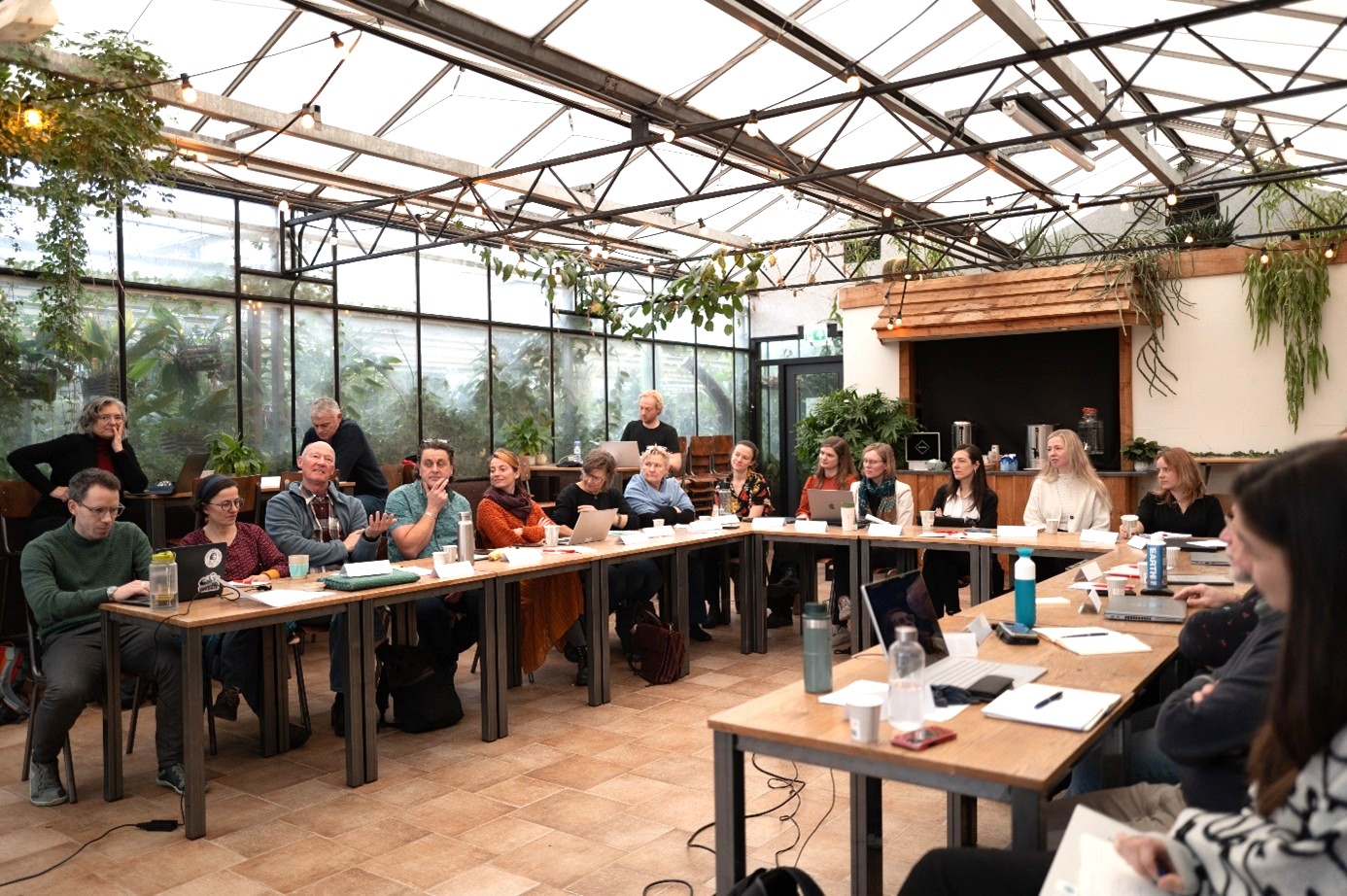
In the greenhouse of the Botanical Gardens of Utrecht University. Photo credits: Bas Niemans.
Joint initiative
The workshop was a joint initiative of Ecowende, Utrecht University and the Offshore Wind Ecological Programme (Wozep). The research programmes of Ecowende and Wozep have similar questions about the condition of harbour porpoises and the implications for implementing this knowledge in models such as iPCoD.
Want to know more?
For more information about research on stranded harbour porpoises, see the website of Universiteit Utrecht.
You can read about Wozep and marine mammal research on the Noordzeeloket.